Launching AI-powered products isn’t like launching traditional software. The stakes are higher, the complexity greater, and the metrics for success fundamentally different. Over the course of 50+ enterprise AI rollouts, we’ve identified patterns, pitfalls, and best practices that consistently drive successful launches.
This playbook distills these lessons into actionable strategies for founders, product leaders, and C-level executives looking to maximize the impact of their AI investments.
Why AI Product Launches Are Unique
AI products are not just feature upgrades—they’re intelligent systems that learn, adapt, and interact with users in ways traditional software doesn’t. This introduces unique challenges:
- Data dependencies: AI requires high-quality, well-governed data to function effectively.
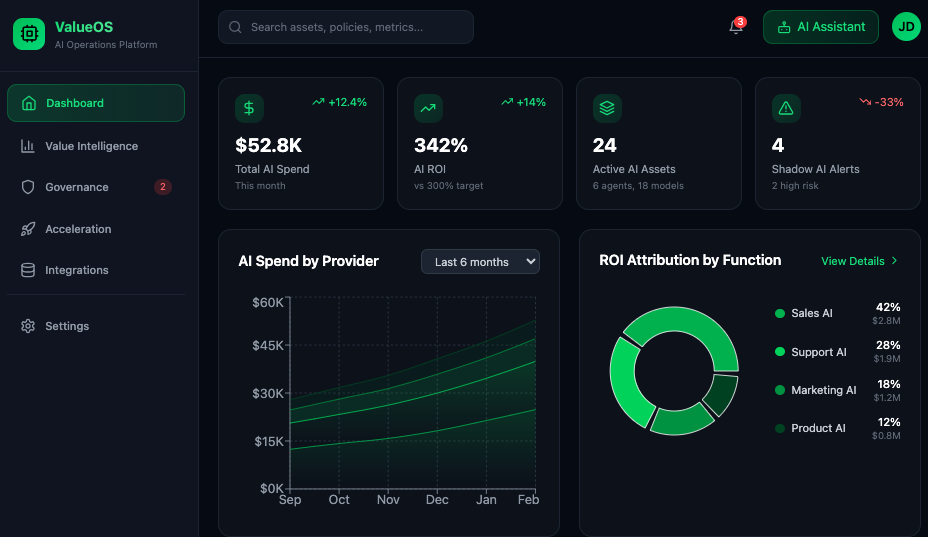
- Complex ROI attribution: Success isn’t measured just in adoption, but in tangible business outcomes like revenue uplift, efficiency gains, or cost reduction.
- Governance & compliance: Autonomous AI agents must operate within security, privacy, and regulatory frameworks.
- Change management: Teams must learn to trust AI decisions while integrating new workflows.
Because of these factors, a traditional product launch playbook often falls short.
The 6 Core Lessons from 50+ Enterprise AI Launches
1. Start with Measurable Outcomes
Before designing features, define success in business terms. Examples:
- Reduced sales cycle by X%
- Increased ARR by Y%
- Cut operational costs by Z%
Every AI feature should tie directly to a measurable outcome that executives and the board care about.
2. Build for Rapid Iteration
AI products improve through feedback loops:
- Launch MVPs that deliver immediate value.
- Measure adoption, performance, and impact.
- Iterate in 30–90 day sprints to optimize outcomes quickly.
Rapid iteration ensures AI products evolve in line with real-world usage rather than assumptions.
3. Centralize Governance Without Slowing Teams
AI adoption can be chaotic. Implement governance frameworks to:
- Track all AI agents and tools in use
- Enforce security, compliance, and access policies
- Provide visibility into cost, performance, and ROI
Governance should enable innovation, not stifle it.
4. Prioritize User Adoption
AI products succeed only when they are adopted and trusted. Strategies include:
- Embed AI seamlessly into existing workflows
- Educate users on AI capabilities and limitations
- Provide transparency and explainability for AI-driven decisions
User trust is a multiplier for ROI.
5. Optimize Cost and Performance
High-performing AI products are both effective and efficient:
- Right-size models for tasks to control inference costs
- Implement caching, routing, and batching for cost efficiency
- Monitor usage continuously to prevent sprawl and redundancy
Cost optimization directly impacts ROI and scalability.
6. Tie AI to Revenue Streams
AI can be a revenue engine, not just a support tool:
- Monetize internal efficiency gains or AI-powered insights
- Offer AI capabilities as modular products or APIs
- Track revenue impact for executive reporting
Companies that treat AI as a product rather than a cost center consistently outperform peers.
The Payoff
Enterprises that follow this AI product launch playbook see transformative results:
- Faster time-to-value and board-ready ROI
- Reduced operational and LLM costs
- Higher adoption and trust across teams
- Clear pathways from AI investment to revenue and efficiency gains
By approaching AI launches strategically, iteratively, and outcome-focused, organizations can scale AI successfully without the chaos and hidden costs that derail many initiatives.
Conclusion
Launching AI-powered products requires a playbook that balances speed, governance, adoption, and measurable impact. Traditional product launch strategies aren’t enough—AI demands a different approach.
The companies that win the AI era don’t just deploy faster—they launch smarter, measure outcomes rigorously, and scale value across the enterprise.
By applying these lessons from 50+ enterprise rollouts, organizations can move from experimentation to predictable, repeatable AI-driven business success.