AI adoption is moving faster than most enterprise control planes. In that gap, a quiet risk is scaling: shadow AI—unauthorized AI tools, applications, and autonomous agents adopted by teams without IT or security oversight. These tools can boost productivity, but they can also leak data, break compliance, and fragment governance.
For CISOs and security leaders, managing shadow AI is no longer optional. It’s foundational to secure, scalable AI.
What Is Shadow AI?
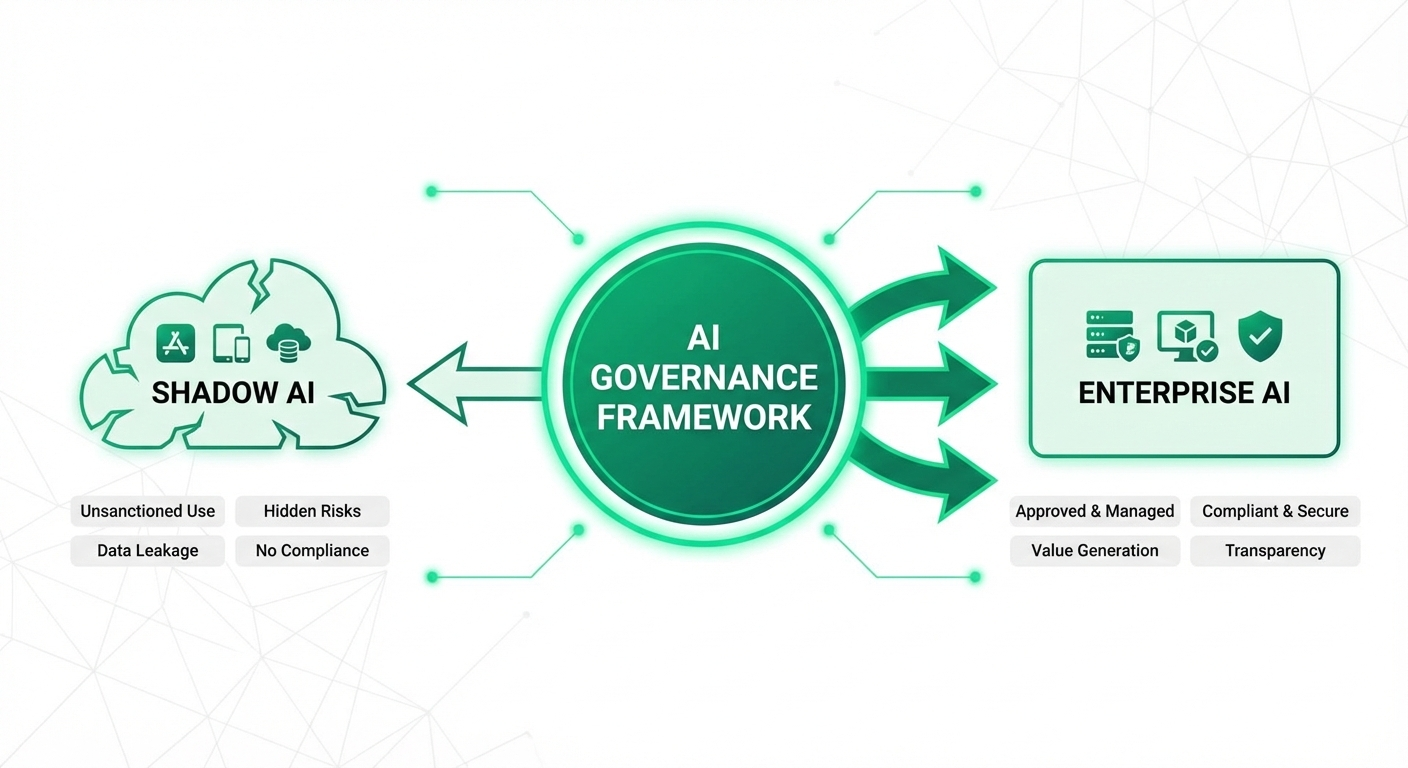
Shadow AI is any AI capability used in the enterprise outside approved governance—even when the intent is positive.
Common examples include:
- Chatbots and generative AI tools accessed via personal accounts
- Third-party AI platforms that bypass corporate procurement and security review
- Department-built or vendor-provided AI agents embedded into workflows without visibility
Shadow AI typically emerges because teams need speed. The problem is what comes with that speed:
- Sensitive data exposure to unvetted external systems
- Regulatory and contractual violations (especially in finance, healthcare, legal, and public sector)
- Hidden costs from duplicate subscriptions, redundant pilots, and unmanaged usage
- Broken ROI attribution, making it hard to prove value—or even know what’s running
In short: shadow AI turns enterprise AI into an unobservable, ungoverned attack surface.
Why CISOs Should Care
Shadow AI is more than a policy issue—it’s a strategic risk with real blast radius:
- Data security: Prompts, documents, and outputs can traverse systems outside corporate controls and logging.
- Compliance: When data residency, retention, access controls, or auditability matter, shadow AI creates immediate exposure.
- Operational sprawl: Multiple rogue tools and agents duplicate work, inflate spend, and complicate incident response and governance.
- Reputational impact: A single leak involving sensitive data and an unsanctioned AI service can become a board-level event.
If your organization is adopting AI at scale, shadow AI is already present. The only question is whether you can see it.
Detection: Practical Strategies That Work
1) Inventory What’s Already in Use
Start with a structured discovery exercise:
- Applications and browser-based AI tools
- AI plugins and integrations in SaaS platforms
- Internal automations, scripts, and “agents” built by business teams
Map usage by department, data type, and business process—not just by tool name.
2) Monitor Network and Identity Signals
Look for indicators of AI service usage:
- Traffic to known AI endpoints
- Unusual upload/download patterns to external services
- OAuth grants and third-party integrations tied to AI tooling
- BYO accounts accessing AI from managed devices
Detection is most effective when you correlate network telemetry + identity + device posture.
3) Create a Safe Disclosure Channel
Shadow AI often thrives because employees fear getting shut down. Replace fear with a controlled path:
- Lightweight reporting (“what are you using and why?”)
- Fast review and approval cycles
- Clear rules on what data can and cannot be used
Transparency increases when teams believe the outcome is enablement—not punishment.
4) Use Centralized AI Governance to Automate Visibility
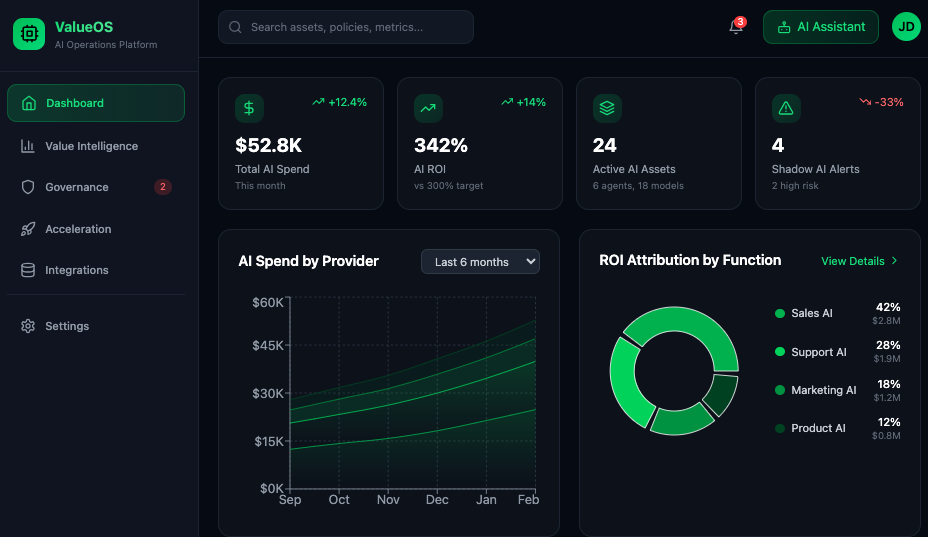
Manual discovery doesn’t scale. Governance platforms can help you:
- Detect and categorize AI tools and agents across business units
- Track ownership, purpose, data access, and risk posture
- Maintain an audit trail for compliance and oversight
The goal is to move from periodic audits to continuous AI asset visibility.
Governance: A Framework CISOs Can Operationalize
Once you can see shadow AI, governance becomes execution—not theory.
Centralized Access Controls
- Approved tool catalog and access tiers
- Role-based controls for who can deploy, configure, and use AI agents
- Identity-based enforcement tied to SSO and conditional access
Data Security Policies for AI
Define enforceable rules for:
- Allowed data classes (public, internal, confidential, regulated)
- Prompt and output retention requirements
- Storage and transmission controls
- Logging and auditability standards
Continuous Compliance Checks
- Vendor risk reviews and security posture requirements
- DPIAs / risk assessments where applicable
- Control validation against internal standards and regulator expectations
Lifecycle Management
Treat AI tools and agents like any other enterprise asset:
- Owner assigned
- Business purpose documented
- Periodic review
- Consolidation or retirement of redundant/non-compliant tools
Governance isn’t a gate. It’s a system that keeps AI adoption scalable.
Balancing Security and Innovation
The fastest way to worsen shadow AI is to make approved AI unusable.
High-performing programs focus on guardrails, not roadblocks:
- Guided autonomy: Let teams move fast inside approved frameworks and data boundaries
- Rapid detection and response: Find unauthorized usage early and resolve it quickly
- Outcome-focused governance: Tie oversight to business value, measurable impact, and acceptable risk
When teams trust the process, they stop working around it.
The Payoff of Shadow AI Governance
Organizations that proactively govern shadow AI get compounding benefits:
- Reduced data leakage and compliance exposure
- Clear visibility into AI usage, ownership, and ROI
- Lower costs by eliminating duplicate tools and unmanaged sprawl
- A culture of secure innovation where AI adoption accelerates responsibly
Conclusion
Shadow AI grows wherever AI adoption outpaces governance. For CISOs, the response isn’t to restrict AI—it’s to make safe AI the easiest path.
Build visibility through continuous detection. Establish governance that scales. Enable teams with guardrails that protect data, meet compliance obligations, and preserve ROI.
In the AI era, security leadership isn’t defined by blocking AI. It’s defined by governing it intelligently—so the business can use it confidently. We can help you regain control of your AI Governance.
Book a free assessment and we'll tell you how.